
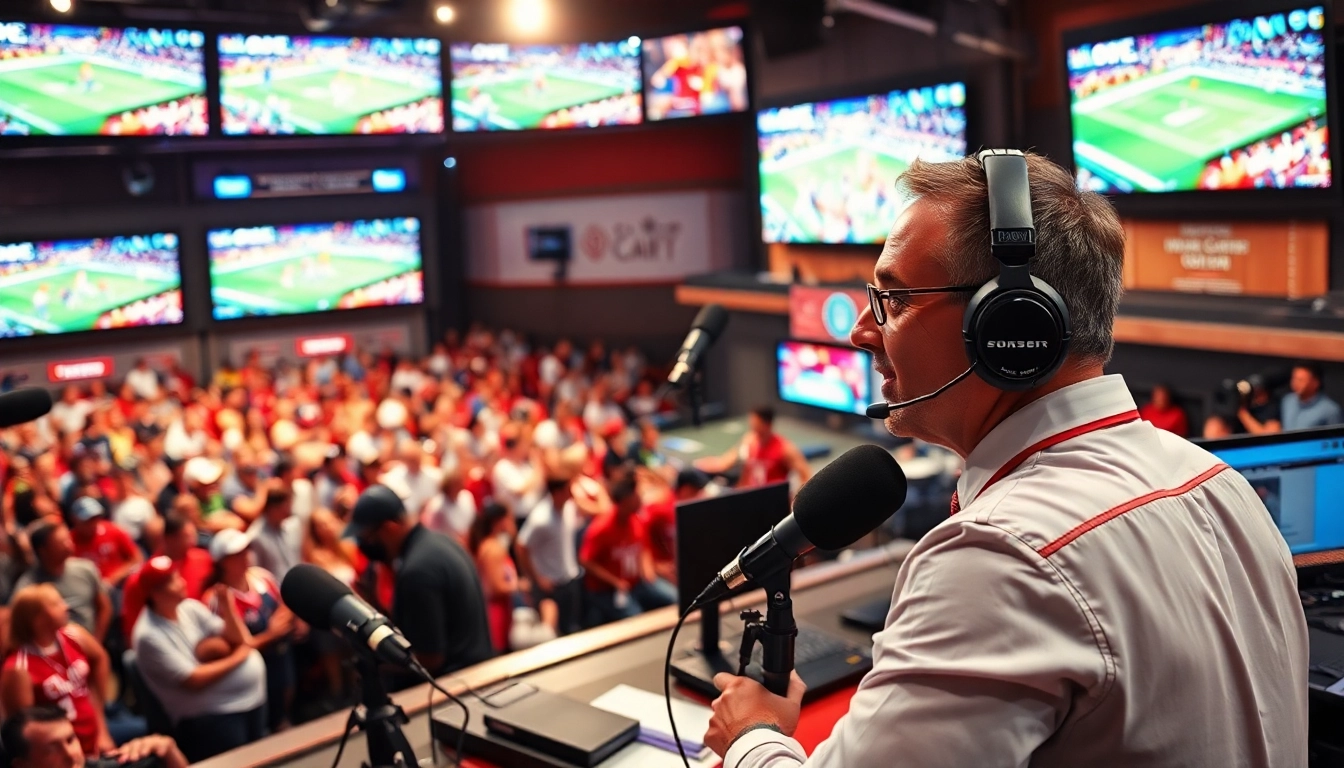
Understanding Sports Broadcasting
Sports broadcasting has evolved significantly, transforming the way sports are consumed around the world. From humble beginnings in the early 20th century to today’s multi-platform environments, the journey has been marked by innovative storytelling and technological advancements. This article delves deep into various aspects of Sports Broadcasting, exploring its history, technological integration, and the intricate components that create meaningful viewing experiences.
History and Evolution of Sports Broadcasting
The history of sports broadcasting dates back to the early 1920s when the first radio broadcasts of sports events brought games into people’s homes. In 1939, the first televised game was a baseball match between Princeton and Columbia, marking a new era of sports accessibility. The transition from radio to television revolutionized accessibility, giving sports a visual dimension that captivated audiences. The introduction of color broadcasting in the 1960s further enhanced viewer engagement, allowing fans to experience games in vivid detail.
As technology advanced, cable television became the predominant medium for sports broadcasting in the 1980s and 1990s, providing specialized sports networks that catered to diverse audiences. The digital era began in the early 2000s, with the rise of the internet and streaming platforms, leading to an exponential increase in content availability. Live streaming, on-demand video, and social media have redefined sports consumption, making it possible for fans to engage with their favorite sports anytime and anywhere.
The Role of Technology in Sports Broadcasting
Technology has played a pivotal role in the evolution of sports broadcasting. Innovations such as high-definition (HD) and ultra-high-definition (UHD) formats have enhanced viewer experiences, providing crystal-clear visuals. Additionally, technologies like 360-degree cameras and drones have changed the narrative, allowing fans to see games from a variety of angles.
Real-time data analytics have also become essential, augmenting live broadcasts with statistics, player analysis, and predictive algorithms. Broadcast teams use advanced software to analyze in-game data, offering viewers compelling insights and enhancing storytelling. The integration of augmented reality (AR) and virtual reality (VR) into broadcasts is another frontier, enabling immersive viewing experiences that draw fans closer to the action than ever before.
Key Components of Effective Sports Broadcasting
Effective sports broadcasting is not only about the technology but also about the human elements that contribute to an engaging broadcast. Several key components are vital to ensuring a quality viewing experience:
- Commentary and Analysis: Seasoned commentators provide insights, contextualizing the action. Their knowledge of the game and ability to narrate complex strategies enriches the viewer’s understanding.
- Camerawork: Skilled camera operators capture pivotal moments with precision, using various angles and close-ups to create dramatic storytelling.
- Production Quality: High production standards in audio, visual effects, and graphics contribute to a polished broadcast, making it visually appealing and professional.
- Engagement: Interactivity, through social media and real-time polls, engages audiences, keeping them involved and invested in the game.
Types of Sports Broadcasting
Live vs. Recorded Broadcasts
Live broadcasts offer a pulse-pounding, immersive view of sporting events as they happen. The immediacy of live broadcasting captures the excitement and unpredictability of sports, allowing fans to experience moments in real-time. Conversely, recorded broadcasts serve to provide accessible replays, highlights, and in-depth analyses, allowing fans to relive iconic moments at their convenience.
Both types of broadcasts play distinct roles; live shows generate buzz and excitement, while recorded broadcasts allow for detailed analysis and insights into performances. The balance between the two is essential for a comprehensive sports coverage strategy.
Radio and Television Broadcasting
Radio broadcasting remains a staple, particularly for audiences on the go. Live play-by-play commentators create an intimate auditory experience for listeners, often painting vivid pictures through their word choices. This medium suits sports like football, basketball, and baseball, where the narrative can drive listener engagement even without visuals.
Television broadcasting, however, offers a richer experience due to visual storytelling. With graphics, replay capabilities, and comprehensive coverage of events, television attracts larger audiences. The combination of audio and visual elements allows for engaging narratives that draw viewers into the heart of the action.
Streaming Services and Digital Platforms
Streaming platforms have transformed sports broadcasting fundamentally. They provide unparalleled flexibility, offering on-demand content, live streams, and original programming tailored to specific fan bases. Platforms like Amazon Prime Video and ESPN+ illustrate how traditional broadcasters are adapting to a digital-first world.
The ability to watch sports from any device has broadened accessibility, allowing fans to stay connected to their favorite teams regardless of location. Furthermore, many platforms utilize data analytics to personalize viewing experiences, offering tailored recommendations based on user preferences and behaviors.
Techniques for Effective Sports Broadcasting
Storytelling in Sports Broadcasting
Storytelling is at the heart of effective sports broadcasting. Commentators and producers weave narratives around athletes, teams, and games, transforming mere events into compelling tales. Building a backstory about players or highlighting rivalries injects drama and depth into broadcasts, fostering an emotional connection for viewers.
Utilizing interviews, historical context, and expert analysis deepens the narrative. The “human element” serves to engage audiences, allowing them to empathize and relate to the athletes. Engaging storytelling not only creates memorable broadcasts but also encourages viewership loyalty over time.
Engagement Techniques for Audience Retention
Audience retention is a key metric in sports broadcasting. To keep viewers engaged, broadcasters employ various techniques, including:
- Live Polls and Q&A Sessions: Engaging the audience with real-time interactions during broadcasts.
- Highlight Reels: Regularly showcased highlights keep fans informed and excited, reinforcing viewership loyalty.
- Expert Guests: Incorporating knowledgeable figures from the sports world adds credibility and insight, attracting viewers.
- Social Media Integration: Utilizing platforms like Twitter and Instagram during broadcasts fosters community engagement.
Use of Analytics and Data in Broadcasting
The use of analytics in sports broadcasting provides a competitive edge. Analyzing viewer habits, engagement levels, and content performance helps broadcasters to refine strategies and enhance the viewing experience. Data-driven insights allow teams to target specific demographics and adjust broadcast strategies based on viewer response.
Analytics can also enrich the storytelling aspect, as commentators can incorporate relevant statistics to provide context and depth. For example, discussing a player’s performance trends or team statistics during a game adds an informative layer to the viewing experience.
Challenges in Sports Broadcasting
Adapting to Technological Changes
The rapid pace of technological advancement poses constant challenges for sports broadcasters. Staying ahead of the latest trends and technologies requires ongoing investment and adaptability. Traditional broadcasters may struggle to integrate new platforms and technologies seamlessly while maintaining high production standards.
For instance, the shift from linear television to streaming services requires accepted best practices in user interface design and mobile accessibility. Organizations must invest in continual learning and adaptation to keep pace with an evolving landscape.
Legal Considerations in Broadcasting
Broadcasting rights and licensing are complex terrains in the sports broadcasting industry. Legal considerations regarding copyrights and broadcasting rights can affect content distribution and accessibility. Broadcasters must navigate agreements with leagues, teams, and local/regional rights holders.
Understanding international broadcasting rights is crucial as sports demand global audiences. Failures in this area can lead to significant financial losses and restricted access to live events, critical for fan engagement. Compliance with broadcasting laws, advertising regulations, and streaming rights must be closely monitored.
Competing for Audience Attention
The competition for viewer attention is fierce, with an overwhelming number of options available for entertainment. Sports broadcasters must create content that stands out in a crowded market, providing unique stories and experiences that resonate with fans on a personal level.
Additionally, the proliferation of digital platforms and social media means that audiences can access sports highlights and commentary from various sources. To compete, broadcasters must offer authentic insights, high production values, and innovative programming that captures audience interest.
Future Trends in Sports Broadcasting
Impact of Virtual and Augmented Reality
Virtual and augmented reality technologies are set to revolutionize how fans experience sports. VR allows viewers to immerse themselves in a 360-degree viewing experience, making them feel like they are part of the event, even from their living rooms. This immersive experience enhances fan engagement by providing a new perspective on the action.
Augmented reality enhances broadcasts through overlaid statistics and information. For example, AR can display player stats during live play, adding depth to the viewing experience in real time. This technology opens new avenues for storytelling and viewer interaction.
The Rise of Interactive Broadcasting
Interactive broadcasting is gaining traction, driven by audience demand for personal engagement. Broadcasters are exploring ways to allow users to select camera angles, access statistics, and interact through polls during live games. This level of interactivity enhances viewer involvement and creates a more personalized experience.
Interactive elements not only offer unique experiences to fans but also provide valuable data to broadcasters regarding viewer preferences, allowing them to fine-tune their programming and advertisements accordingly.
Global Trends and Cultural Influences
The globalization of sports broadcasting is reshaping how content is created and shared across cultures. Different regions are adopting diverse broadcasting styles and content, reflecting local customs and audience preferences. Understanding these cultural nuances is critical for broadcasters looking to expand their reach.
International sporting events such as the Olympics and World Cup have sparked immense interest, showcasing how cultural narratives and local traditions can elevate the viewing experience. Customized local broadcasts featuring culturally relevant content can improve engagement and deepen connections with global audiences.
FAQs About Sports Broadcasting
What is sports broadcasting?
Sports broadcasting refers to the coverage and transmission of sporting events via various media, including television, radio, and online platforms. It encompasses live, recorded, and on-demand formats.
How has technology influenced sports broadcasting?
Technology has transformed sports broadcasting through innovations like high-definition visuals, real-time analytics, and streaming services, significantly enhancing viewer experiences and accessibility.
What are the different types of sports broadcasting?
Sports broadcasting types include live broadcasts, recorded segments, radio, television, and emerging digital streaming platforms. Each type serves unique audience needs and engagement strategies.
What are the main challenges in sports broadcasting?
Main challenges include adapting to technological changes, navigating legal issues regarding rights, and competing for viewer attention in a crowded media landscape.
What future trends should we expect in sports broadcasting?
Future trends include the incorporation of virtual and augmented reality, rising interactive broadcasting formats, and the adaptation of global trends to cater to diverse audiences.